
But today we're not talking about shoes. We're talking about one of the most instructive corporate collapses in recent market history, and what it reveals about the gap between what a stock price says and what a company actually is.
On September 4, 2026, S&P Dow Jones Indices announced Nike's removal from the S&P 100, effective before market open on September 21. The first time in 18 years. Dell Technologies, Palo Alto Networks, Arista Networks, and Sandisk took the slots. Nike was not alone — Honeywell Aerospace, Simon Property Group, and Colgate-Palmolive were also removed in the same rebalance. The message from the index committee was polite and mechanical, as these things always are. The reality was not polite. Nike's market cap had fallen so far, so fast, that it no longer belonged in a list of America's 100 most valuable companies.
The stock hit $38.59 in August 2026. Its lowest level since 2014. Down roughly 78% from its November 2021 peak near $180. More than $200 billion in market capitalisation gone.
Before we talk about why, I want to make a point about stock prices that most financial commentary skips.
A Stock Price Is Not a Company
Amazon hit $7 during the dot-com collapse. The business kept running. The stock recovered. It became one of the most valuable companies in history. The gap between $7 and what Amazon was actually worth was not a reflection of Amazon — it was a reflection of what the market believed at a moment of extreme fear.
SpaceX has been valued at over $350 billion at various points, despite having no public shares, no conventional revenue model in the traditional sense, and business lines — Starship, Starlink, point-to-point flight — that have never existed at commercial scale before. The valuation reflects what the market believes about the future, not the present.
Stock prices are opinions about the future, expressed in numbers, updated every second by people who are often wrong, sometimes right, and always operating with incomplete information.
Nike at $180 in 2021 was not Nike being worth $180. It was the market saying: "We believe this company will keep growing, keep compounding, keep expanding. Here is the present value of that belief." Nike at $38 in 2026 is not Nike collapsing. It is the market saying: "We no longer believe the story."
The story is what changed. Let's talk about what happened to it.
The Decision That Broke Nike
Around 2017, Nike made a strategic pivot. The company decided to reduce its dependence on wholesale retailers — Foot Locker, Dick's Sporting Goods, Zappos, department stores — and push consumers toward Nike's own channels. Its apps. Its website. Its stores. Direct-to-consumer, or DTC.
The logic was defensible. DTC eliminates the middleman. Margins are higher. You control the relationship with the customer. You own the data. You capture the full price instead of selling at wholesale and watching a retailer take the markup.
Under CEO John Donahoe, who took over in 2020, Nike doubled down on this bet. The company reduced its wholesale exposure, pulled back from retail partners, and invested heavily in digital infrastructure.
And then something happened that the strategy did not anticipate.
The retail partners Nike walked away from needed to fill their shelves with something. So they did. Hoka. On Running. New Balance. Salomon. Brands that had been smaller, nicher, less dominant — they got the shelf space Nike vacated. They got the foot traffic. They got the exposure. And they turned it into market share.
DTC, meanwhile, turned out to be much harder than the model suggested. Nike's own stores captured a specific type of customer. They missed others entirely. Digital sales fell 14% in the most recent quarter. Meanwhile, wholesale — the channel Nike had been retreating from — grew 8%.
The strategy that was supposed to make Nike more profitable made it less competitive. The channels it abandoned were captured by competitors who are now legitimate threats to the core business.
China, Tariffs, and Converse
The DTC mistake is the structural story. But there are three other forces compressing Nike simultaneously.
Greater China revenue dropped 17% in the most recent quarter. EBIT in China fell 49%. Nike had treated China as its largest international growth engine for years. That engine has stalled, and Nike is projecting another 20% decline in China sales in the next quarter. The reasons are a combination of local competition — Anta, Li-Ning, Xtep have become genuinely formidable in their home market — and a consumer shift toward domestic brands that has accelerated across categories in China.
Tariffs have hit Nike's gross margins directly. The company manufactures the overwhelming majority of its products in Vietnam, Indonesia, and China. Tariffs on imports from those countries have added an estimated $1.5 billion in cost pressure. Gross margin contracted by 3 percentage points in the most recent quarter. For a consumer goods company, margin is the game.
And then there is Converse. Nike owns Converse. Converse revenue fell 30% in the most recent quarter, accelerating from a 27% decline the quarter before. The Chuck Taylor has been a cultural staple for decades. It is now in structural decline, and Nike does not appear to have a clear answer for what comes next.
The CEO Problem
John Donahoe resigned in October 2024 after what turned out to be one of the most damaging tenures in Nike's corporate history. During his time as CEO, Nike shares fell roughly 20% while the S&P 500 gained approximately 80%. He came from ServiceNow and brought a tech-first, DTC-first, digital-first mindset to a company that had been built on product, culture, and athlete relationships.
Elliott Hill, a Nike veteran who had retired and been brought back, replaced him. The market responded with a 7% jump on the day the appointment was announced. Since Hill took over, the stock has lost approximately half its value. Not because Hill is failing — the restructuring is real and ongoing — but because the problems Donahoe created are deeper than one leadership change can fix in a year.
Rebuilding wholesale relationships takes time. Winning back shelf space from Hoka and On Running takes time. Reversing margin compression while tariffs are actively increasing takes time. Restoring growth in China while local brands are ascendant takes time.
The market is not patient.
The Mechanical Selling That Comes Next
There is a dimension to S&P 100 removal that most coverage skips: the forced selling.
The S&P 100 is tracked by institutional investors, ETFs, and index funds that specifically target mega-cap exposure. When Nike exits, those funds are required to sell their Nike holdings to rebalance. This is not discretionary. It is mechanical. It happens regardless of what anyone thinks Nike is worth.
The effective date is September 21, 2026. Between now and then, index-tracking funds will be selling Nike. The stock was already down 75%+ before the announcement. The rebalancing adds another layer of selling pressure to a stock that has been under sustained pressure for five years.
Beyond the immediate flows, S&P 100 membership functions as a screening criterion for some institutional fund managers. Losing that designation reduces the pool of potential buyers for the stock — at precisely the moment the company most needs new investors to believe the turnaround story.
Is This a Buying Opportunity or a Value Trap?
Here is the honest answer: nobody knows.
The case for Nike is straightforward. The brand has survived worse. The logo remains one of the most recognised in the world. The wholesale rebuild is showing early signs — wholesale revenue grew 8% while DTC fell. Elliott Hill understands the product and the culture in a way Donahoe never did. The stock is trading at valuations not seen in over a decade. For long-term investors with a multi-year horizon and tolerance for continued near-term pain, there is an argument.
The case against is also straightforward. The competitive landscape has permanently changed. Hoka, On Running, New Balance, and Salomon are not going back into their boxes. China is structurally harder. Tariffs are a sustained headwind, not a temporary one. Converse is in decline with no obvious catalyst. And the DTC unwind — returning to wholesale dependence — means Nike is rebuilding the very relationships it spent years dismantling, at a cost to margins and on competitors' terms.
Amazon at $7 recovered because its core business — logistics infrastructure, marketplace economics, cloud computing — was intact and growing even when the stock wasn't. Nike's core business is not intact in the same way. The product pipeline, the retailer relationships, the China position — all of them require rebuilding.
That doesn't mean Nike fails. It means the recovery, if it comes, will be slower and harder than the simple "great brand, buy the dip" thesis suggests.
What the S&P 100 Removal Actually Means
Index inclusion is mechanical. A company leaves the S&P 100 when its market capitalisation no longer qualifies it for the list. It is not a judgement. It is arithmetic.
But the arithmetic reflects something real. In 2006, Nike joined the S&P 100. For 18 years it belonged there, alongside Apple, Microsoft, Berkshire Hathaway, Johnson & Johnson. It was, by market capitalisation, one of America's 100 most valuable companies.
It is no longer. The companies that replaced it — Palo Alto Networks, Arista Networks, Dell Technologies, Sandisk — are cybersecurity, cloud networking, and digital infrastructure companies. The index is telling you something about where value is being created in 2026 and where it is being destroyed.
Nike's removal is not a death sentence. Companies leave indices and return. But the context matters: Nike is being replaced by companies building digital infrastructure — cloud networking, cybersecurity, enterprise storage. The index is not just dropping Nike. It is telling you what the market believes the next decade looks like. Nike may recover its position. But the path back requires solving problems that have resisted solution for five years, in a competitive environment that is more difficult than it has ever been.
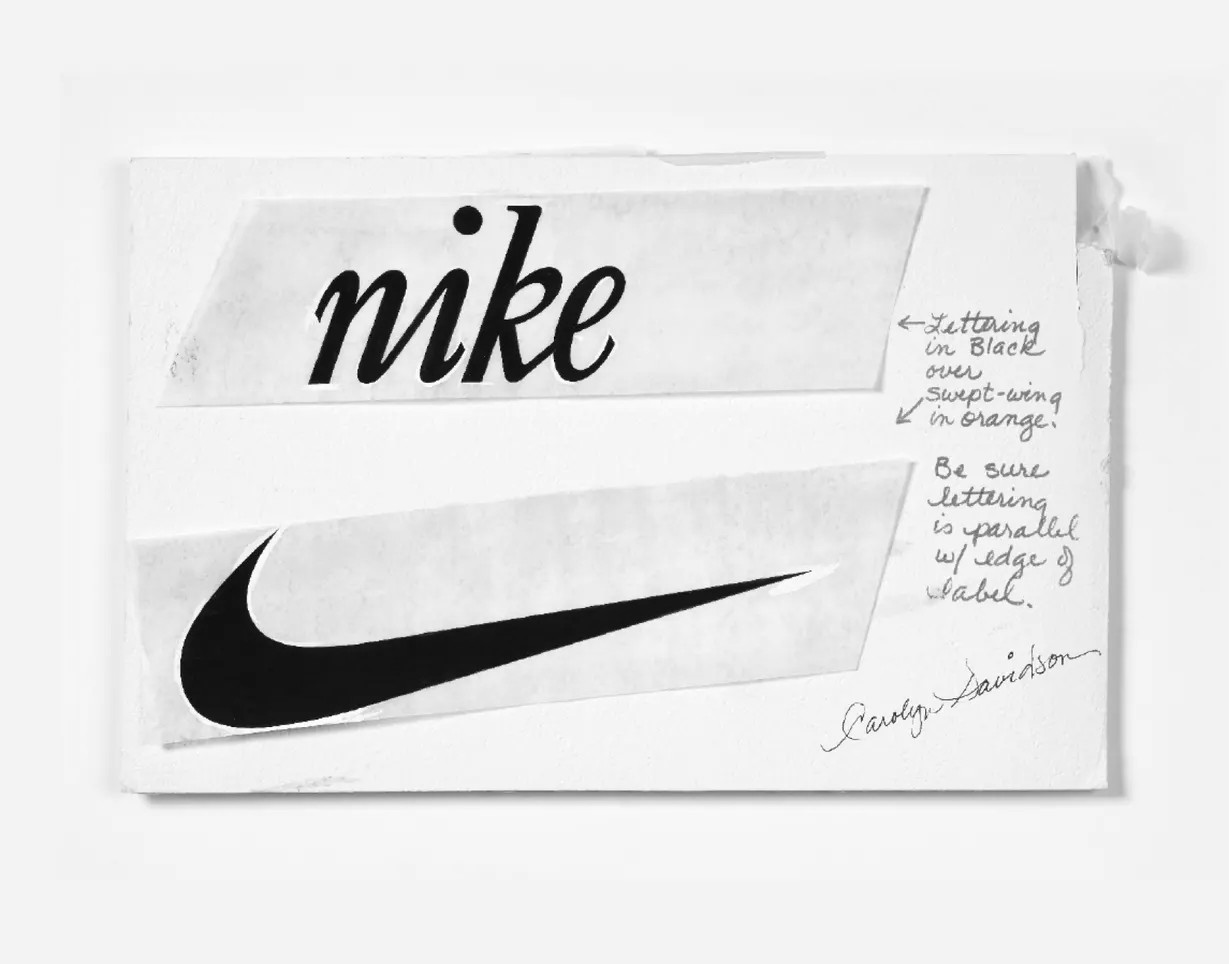
The swoosh is still one of the most powerful symbols in consumer culture. The question is whether that symbol can translate back into the financial performance that once justified a $180 stock price.
The market has its answer. For now.
FreeMalta covers company founding stories at The Garage. This article does not constitute investment advice. Trading involves risk. Capital at risk.