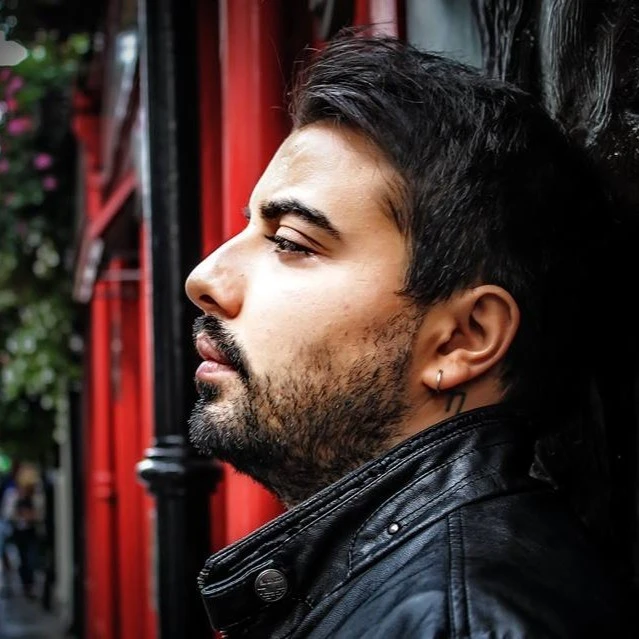
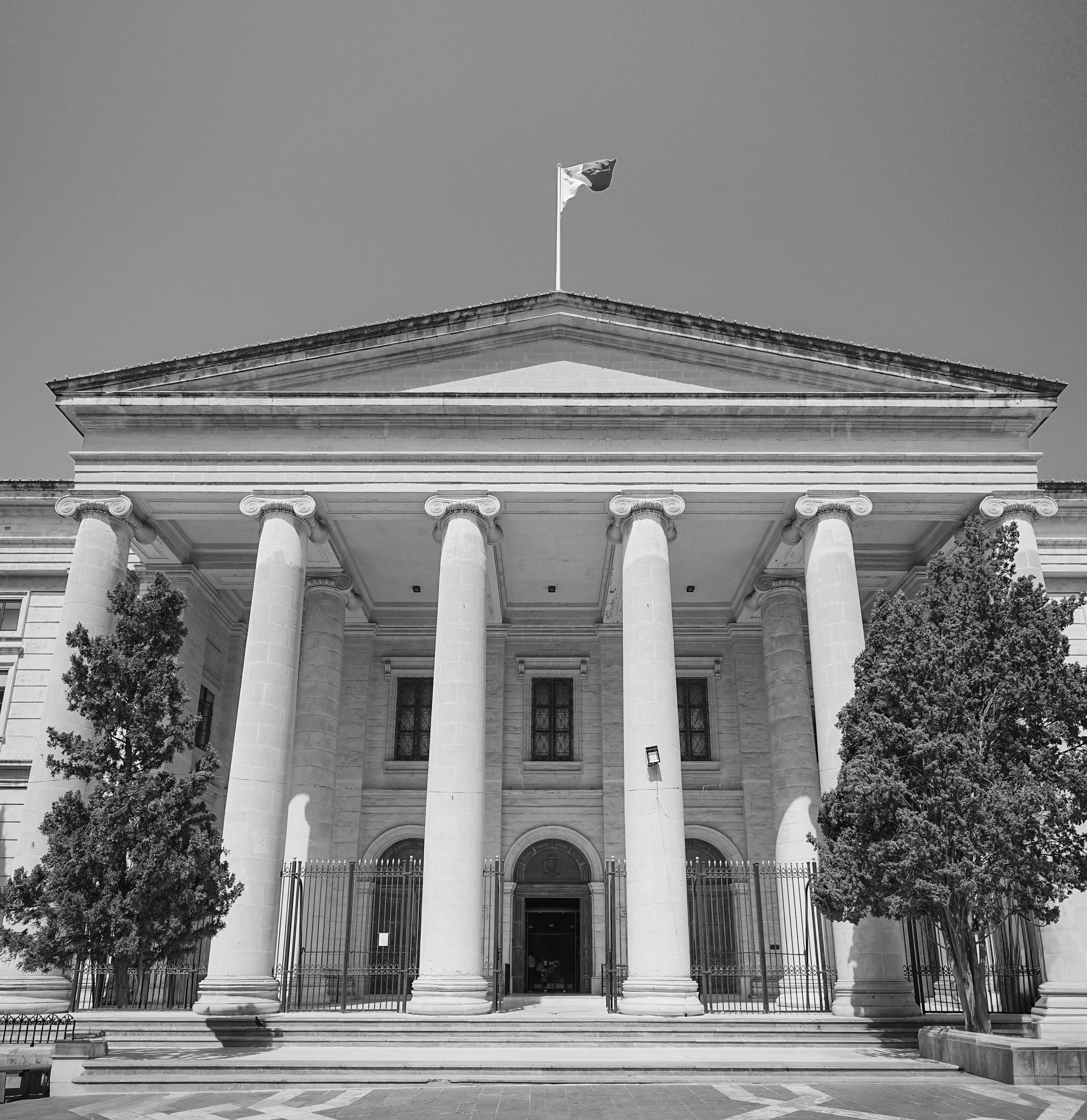
Let me tell you who I am before I tell you what I think.
I have been living in Malta for twelve years. I have attended more than a hundred court hearings over the years. I have watched how evidence is presented, how lawyers cross-examine, how judges intervene. I have watched Suits six times. I understand that this is not the same as being a lawyer, but it is considerably more than most of the people currently explaining the Fenech verdict to the public.
I am also on the electoral register as a Maltese citizen. I vote. Which means I am eligible for jury duty. The nine people who sat in Courtroom 22 and delivered an 8-1 verdict could have included someone exactly like me. When you say the jury was wrong, you may be saying I would have been wrong.
I want to be careful about something else before going further. I am not saying Yorgen Fenech is innocent. I am not saying the jury reached the correct conclusion. I was not in that courtroom for two months. I did not hear the evidence. I am not in a position to say whether the prosecution proved its case beyond reasonable doubt, and neither is almost anyone else who is currently expressing certainty about the matter.
What I am saying is that most of the commentary surrounding this verdict is based on a misunderstanding of how the legal system actually works — and that misunderstanding is causing real harm.
Malta's Jury System: What It Actually Is
Nine jurors. Not twelve. This is the first thing people get wrong when they reach for American or British courtroom references.
Malta's Criminal Code requires a minimum of six votes for a valid verdict. That means a 6-3 decision is legally sufficient to convict or acquit. A 5-4 split is not a verdict at all — it means the deliberation continues. There is no hung jury in the Maltese system the way there is in the United States. In the US, a 12-person jury must reach a unanimous decision in federal criminal cases. If it cannot, a mistrial is declared and the case can be retried. That concept does not exist in the same form here.
The Fenech verdict was 8-1. Eight jurors voted to acquit. One voted to convict. This was not a close call by the standards of Maltese law. The legal threshold for conviction is six. Eight jurors decided the prosecution did not prove its case beyond reasonable doubt. That is a significant margin, not a technical one.
Judge Edwina Grima explained the system clearly before the jurors retired to deliberate. A valid verdict required at least six votes. A 6-3 decision would have been legally binding in either direction. The jury did not produce a 6-3 result. It produced an 8-1 result, after eight hours of deliberation on a two-month trial.
In the US system, that same jury — with twelve members required to agree unanimously — would have needed all twelve to vote acquittal for the same result. One dissenting juror in an American federal criminal trial would have produced a hung jury and a potential retrial. Malta's system does not work that way. Six of nine is the threshold. The verdict cleared that threshold by two votes.
Who Sits on a Maltese Jury
The people expressing outrage at the jury — specifically, the suggestion that the jurors were incompetent, compromised, or otherwise unworthy of the decision they made — have not thought through what they are actually saying.
Maltese jurors are drawn from the electoral register. Maltese citizens who vote are eligible. I vote. My name is on that register. I could have been one of those nine people. When commentators describe the jury as having made an obviously wrong decision, they are describing a group of people that could include me, my neighbours, my friends.
In the US, jury selection involves a process called voir dire — a preliminary examination in which lawyers and judges question potential jurors, and both sides have the ability to dismiss candidates they consider unsuitable. The process is designed to identify and exclude jurors who cannot be impartial. Malta's jury selection process is different, and the comparison to American courtroom procedures is not straightforward.
But the fundamental point holds: nine ordinary citizens were given the same information that was presented in court over two months, received instruction from a judge on how to assess that information, and reached a decision by a margin of 8-1. The alternative being implied by much of the commentary — that a different set of jurors would have reached a different conclusion — may be true. It may also not be. Neither possibility tells you what the right outcome would have been.
The Tampering Question
There are serious questions about whether the jury pool was surveyed before the trial. Reports of potential jurors being approached or profiled in advance of the deliberations are not small questions. They go to the integrity of the process — and that integrity matters regardless of what verdict you wanted the jury to produce.
These questions are legitimate. They should be investigated. But they are separate from the question of whether the verdict was correct. A verdict reached by a compromised process is a process problem, not necessarily an outcome problem. The remedy for process failure is an appeal or a new investigation — not public declarations about the guilt of someone a court has acquitted.
The Attorney General is considering an appeal. The judge, in her final instructions, has already ordered that evidence be sent to the Police Commissioner to determine whether third parties should face criminal proceedings. The legal process is not over. The commentary that treats it as over is not helping it continue.
The iGaming Expert Problem
I read the WhosWho.mt coverage. They spoke to people from Malta's business community — hospitality, tech, marketing, iGaming, real estate, consultancy, finance — and asked them what they thought of the verdict.
I understand why outlets do this. It generates content. People are willing to speak. The quotes are often emotionally resonant. And in a small island where everyone knows everyone, there is a genuine sense of collective processing happening that has real social meaning.
But I want to say plainly what this kind of coverage actually produces: it asks people who have no expertise in criminal law, who have not sat through the trial, who have not heard the evidence, who have not been instructed by a judge on the legal standards of proof, to render a judgment on whether a verdict was just.
The person running an iGaming operation has opinions. The person in hospitality has feelings. Those opinions and feelings are real. They reflect something genuine about the public's relationship with this case. But they are not legal analysis. They are not evidence. And when they are presented as if they constitute meaningful commentary on the justice system's function, they do something specific: they encourage the public to evaluate the outcome of a legal process using non-legal criteria.
Criminal law does not operate on gut feeling. It does not operate on what seems obvious to someone who followed the news coverage. It operates on what was presented as evidence, assessed against a legal standard of proof, by people who heard all of it.
I have attended a hundred court hearings. I still would not presume to tell you what the right verdict was in a trial I did not attend. The person who has never been in a courtroom and spent the afternoon reading news summaries should extend themselves at least the same intellectual humility.
What Clickbait Does to Justice
Malta is a small island. Every major criminal case becomes a social event. People have genuine emotional stakes in outcomes — particularly in a case like this one, where the victim was a journalist whose work mattered and whose death shook the country.
That emotional investment is understandable. It is human. But the coverage that feeds that investment — the hot takes, the business community reaction pieces, the social media declarations of injustice — does something that is worth naming directly.
It makes the legal process harder to function.
When the public is told, before an appeal has been filed, that justice has failed, that the system is broken, that the verdict is an outrage — it creates a social environment in which the legal remedies that remain are harder to pursue. Appeals take place in legal institutions that exist within a social context. Witnesses who might come forward make decisions partly based on what they believe the social consequences will be. Potential future proceedings are shaped by what the public has already decided.
The legal process in this case is not finished. The Attorney General is considering an appeal. There are outstanding questions about third parties that the judge herself has referred to the Police Commissioner. The system is still moving.
The commentary that has already declared it over and wrong is not just analytically incorrect. It is actively counterproductive to the outcomes it claims to want.
What I Actually Think
I think the murder of Daphne Caruana Galizia was one of the most significant events in Malta's modern history. I think the investigation into that murder has been marked, at various points, by institutional failures that are real and documented. I think the questions about jury integrity deserve serious investigation. I think the prosecution's inability to secure a conviction at the highest level of alleged responsibility leaves something unresolved that matters.
I also think that eight jurors listened to two months of evidence and concluded that the prosecution had not proven its case beyond reasonable doubt. That conclusion may be wrong. It may reflect a failure of the prosecution's case rather than a failure of the jury's reasoning. It may reflect something more troubling. We do not know.
What I am confident about is this: the people currently most certain about what the verdict should have been are, almost without exception, the people who know the least about how the case was actually made and assessed. That certainty is not a strength. It is the thing that makes the actual pursuit of justice harder.
Let the lawyers speak. Let the appeal process run. Let the Police Commissioner assess the referral from the judge. Let the system that still has work to do, do its work.
And perhaps, the next time a major verdict is handed down, we might ask lawyers for their analysis and leave the iGaming operators to their opinions about iGaming.
FreeMalta is Malta's first AI-native intelligence platform and an Official OpenAI Select Partner. This article represents the personal opinion of the author.