
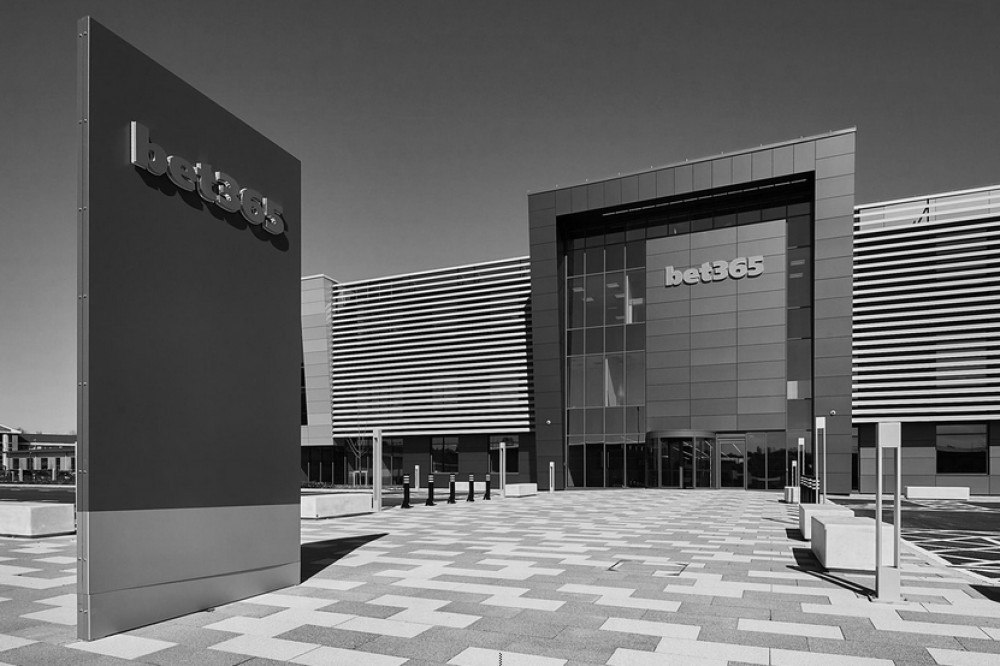
I was drinking coffee at home this morning, looking out at the Valletta skyline and Manoel Island, when the news came through. Bet365 is cutting 340 jobs. Stoke-on-Trent, Malta, Gibraltar.
I mention this not for the view — though it is a good one — but because Bet365's Malta office is close enough that I do not need to imagine what this morning looked like inside it. I have been in those buildings. I know people who work in them. The announcement lands differently when it is not abstract.
But the bet365 story is not just a Malta story. It is the British iGaming industry absorbing the consequences of a tax decision that everybody saw coming and nobody fully prepared for.
What the Tax Actually Did
On 1 April 2026, the UK's Remote Gaming Duty rose from 21% to 40%. Not a gentle adjustment. A near-doubling of the tax burden on every pound of profit generated by online casinos, slots, and remote gaming products serving UK customers — overnight.
The decision came from Chancellor Rachel Reeves's Autumn Budget 2025. The government's logic was explicit: remote gaming carries higher social harm than other forms of gambling and should be taxed accordingly. The revenue projection was £1.1 billion in additional tax by 2030.
What the government's projection did not dwell on: the people on the other side of that calculation.
The sector's response was immediate and entirely predictable. evoke — the William Hill, 888, and Mr Green parent — estimated the combined RGD and forthcoming remote betting duty increases would cost it £125-135 million annually once fully implemented, with an £80 million impact in 2026 alone. Entain, which owns Ladbrokes and Coral, estimated a £250 million hit across 2026 and 2027. Entain has since cut 500 jobs and closed 70 shops. It has also dropped out of the FTSE 100 — the first time in four years — with its stock down 40% over the past year.
The pattern across the sector:
Betfred closed 132 shops, citing taxation. 600 jobs gone. William Hill announced 270 betting shop closures. evoke closed 200 shops in May. Paddy Power, which closed 57 shops last October, has now confirmed a further 100 closures with 400 jobs at risk. The Betting and Gaming Council estimates that by the end of 2026, more than 600 betting shops will have closed and 5,000 jobs will have been lost since the budget announcement.
And now bet365. 340 roles. Malta, Gibraltar, Stoke.
Why Bet365 Is Different
Every other British operator making cuts this year had retail exposure to restructure. When the tax rises, you close the shops. The margins were already thin in retail betting; the tax increase simply accelerated an already-visible decline. The restructuring has a logic to it.
Bet365 is digital-only. There are no shops to close. The entire workforce of approximately 10,000 people works in digital operations — technology, trading, customer service, product, compliance. When bet365 cuts 340 jobs, it is not closing underperforming retail units. It is cutting operational capacity in a business that has no fat to trim through estate rationalisation.
The remote gaming duty hits bet365's core business directly. And the second wave has not arrived yet. The new Remote Betting Duty — 25% on online sports betting, up from 15% — lands in April 2027. Bet365's sports betting operation is one of its largest revenue lines. That increase is coming on top of the casino and games duty that already doubled.
The company's statement used language that finance departments write when they are being honest about the mechanics: "facing a highly competitive trading environment, plus increased regulatory and tax-related costs." Both clauses are accurate. The competitive environment has intensified as operators compete for UK market share with lower margins. The tax costs have risen sharply. The 340 jobs are the arithmetic consequence.
Malta in the Middle
The Malta layoffs are a smaller number — around 40 of the 340 — but they carry a specific weight in the local context. LeoVegas made cuts earlier this year. GIG has restructured. The iGaming companies that built significant Malta operations during the industry's expansion phase are now rationalising those operations as the UK market — the largest English-language online gambling market in the world — becomes structurally less profitable.
Malta's iGaming sector employs tens of thousands of people directly and supports a larger ecosystem of legal, financial, compliance, and technology services. The island's regulatory environment and EU membership made it the natural headquarters for British-facing operators who needed European licensing infrastructure. When those operators face sustained margin pressure in their largest market, the Malta headcount is part of the cost base that gets reviewed.
This is not a crisis for Malta's iGaming sector. But it is a signal. The operators that expanded aggressively into Malta during the growth years are now managing for profitability rather than scale. The two things are not always compatible.
The Avalanche Logic
There is a pattern to how regulatory tax increases move through an industry. The announcement comes. Companies assess the impact and issue statements about uncertainty. Marketing budgets are cut first — the most visible and most reversible cost. Then headcount reviews begin, starting with redundancy consultations in jurisdictions with the most legal flexibility. Then the structural decisions: shop closures, office consolidations, technology investment pauses.
The UK iGaming industry is currently in the headcount phase. The shop closure decisions have largely been made. The office consolidations are beginning. April 2027 — the remote betting duty increase — represents the next trigger point. Operators who have absorbed the gaming duty increase and restructured are now modelling the second impact on their sports betting margins. The decisions that follow that modelling will produce another round of announcements.
The Betting and Gaming Council's chief executive warned explicitly about the risk of pushing activity toward unlicensed operators: the tax increases may ultimately reduce total gambling tax revenue by making regulated gambling less competitive against the unregulated market. evoke's board made the same argument in its official response to the budget. Whether the Treasury's model accounts for that dynamic will become clear over the next two years.
340 People
The number in the headline is 340. It is also 340 conversations that happened this morning in Stoke, Malta, and Gibraltar — managers and HR partners sitting across from people who came to work thinking this was a normal Tuesday.
Bet365 is promising voluntary redundancies first, full support throughout, a commitment to minimising compulsory losses. These are the right things to say and, for a company built over decades with a genuine culture of long tenure, probably the right things to mean. But the structural reality is that 340 roles are being eliminated because the economics of the market in which bet365 operates have changed materially, and the company needs to adapt.
The tax decision was made in Westminster. The consequences landed in Stoke, Malta, and Gibraltar.
That is how it always works. The distance between the policy decision and the person sitting at their desk when the call comes is measured in miles and bureaucratic layers. The human weight is entirely local.
FreeMalta covers iGaming and business news from Malta. This article represents the author's personal perspective.