
The Maltese Property Paradox: What Malta Real Estate 2025 Report Tell Us?
Unlock the Malta Real Estate 2025 Gig: A deep dive into the 6.88% price growth, 1.99% mortgage rates, and the best yield zones from St. Julian's to Gozo.
Ilhan Irem Yuce
In the world of global real estate, most markets are driven by speculation; however, Malta’s 2025 trajectory is a masterclass in fundamentally driven growth. For the strategic investor, the question in 2025 is no longer whether to enter the Maltese market, but how to navigate its nuanced segmentation.
Today, we don’t just look at price tags; we audit the underlying economic engine.
You can calculate your net salary and learn how much you can afford a house via FreeMalta.com
1. The Cold Hard Arithmetic of Growth
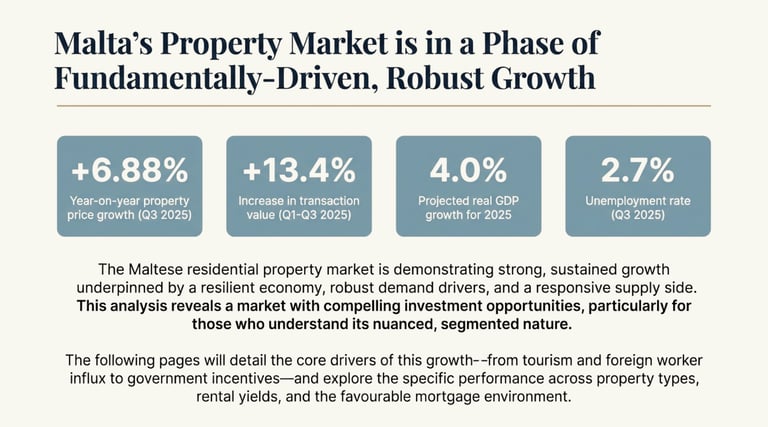
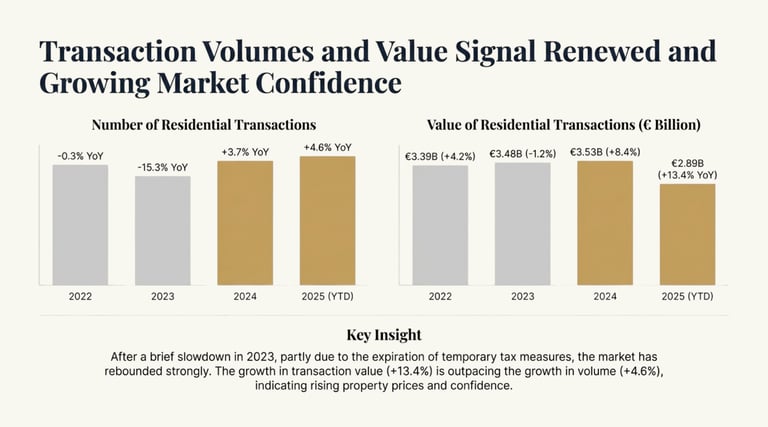
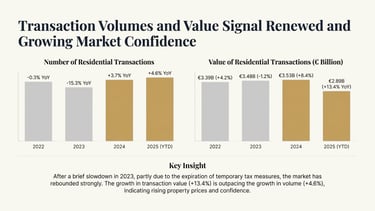
As of Q3 2025, the Maltese residential market has outperformed its European peers with a 6.88% year-on-year price increase. But the headline figure only tells half the story. While the volume of transactions rose by a steady 4.6%, the total transaction value skyrocketed by 13.4%.
The market is shifting toward high-value, premium assets. Investors are no longer just looking for entry-level units; they are competing for quality, energy-efficient, and strategically located properties that promise long-term capital preservation. Simply buy today, profit tomorrow.


5. Strategic Yield Mapping: Beyond the Postcode
The "Malta Insider" philosophy is about identifying the "sweet spot" where capital appreciation meets rental yield. Our 2025 data reveals a counter-intuitive truth:
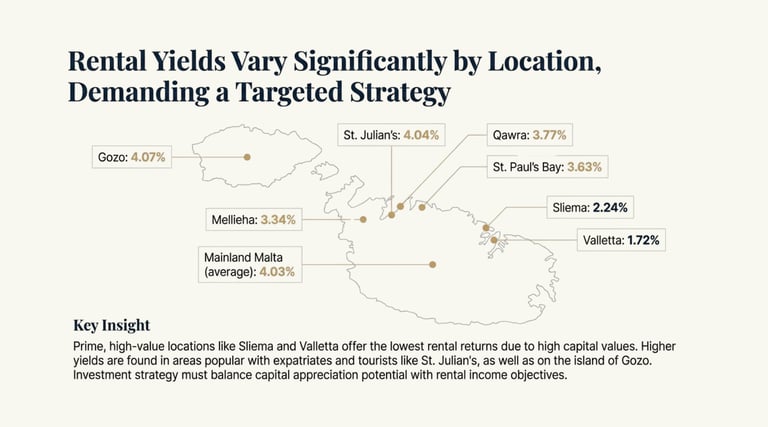
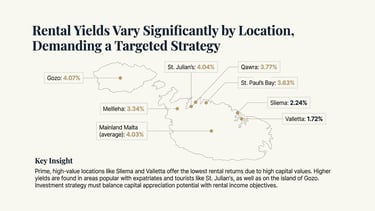
Sliema (2.24% yield) and Valletta (1.72% yield) are "Safe Haven" assets perfect for capital preservation but low on monthly cash flow due to high entry costs.
St. Julian’s (4.04% yield) and Gozo (4.07% yield) represent the "Yield Hunter's" choice. Gozo, in particular, has emerged as a high-growth zone as digital nomads and retirees seek value outside the congested Northern Harbour.
2. The Economic Fortress: GDP and Employment
The strength of Malta’s property market is inseparable from its macro-economic resilience. While the Eurozone grapples with stagnation, Malta’s projected GDP growth of 4.0% for 2025 provides a rock-solid foundation. Coupled with a historic low unemployment rate of 2.7%, the demand for housing is not a bubble; it is a byproduct of a labor market that is literally bursting at the seams.
Furthermore, the domestic financial environment remains uniquely favorable. Despite broader European interest rate hikes, local banks have maintained mortgage rates at an enviable 1.99% as of October 2025. This creates a rare window of low-cost borrowing in a high-growth environment.
3. The Multiplier Effect: Tourism and Foreign Labor
The demand engine is fueled by two unstoppable forces:
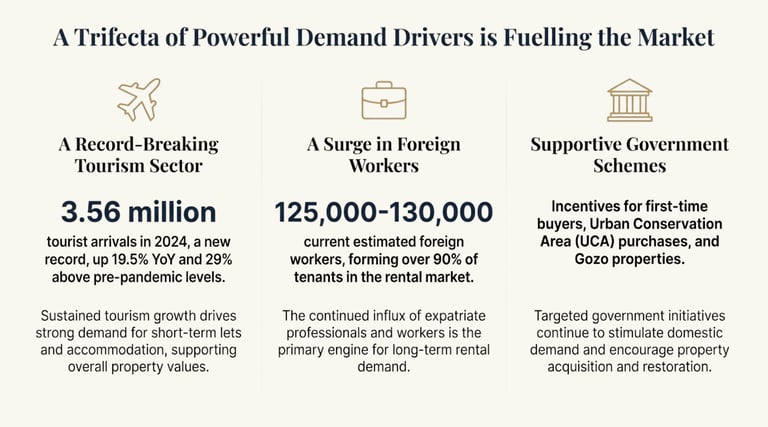
The Tourism Surge: 2024 closed with a record 3.56 million arrivals 29% higher than pre-pandemic levels. This has placed immense pressure on the short-let market (AirBnB), particularly in historical and coastal hubs.
The Expat Influx: With nearly 130,000 foreign workers now residing in Malta, they represent over 90% of the long-term rental market. This demographic does not just need a place to stay; they demand modern amenities and proximity to iGaming and FinTech hubs.
4. The "Audit" on Segmentation: Winners and Losers
A building is only as strong as its weakest pillar. In 2025, the market is highly segmented:
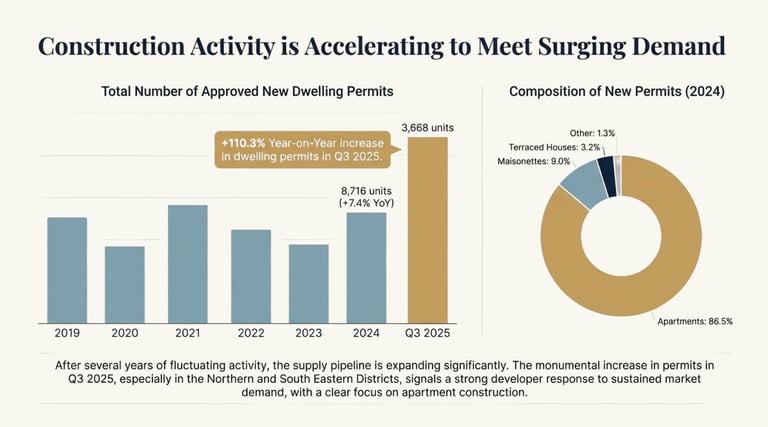
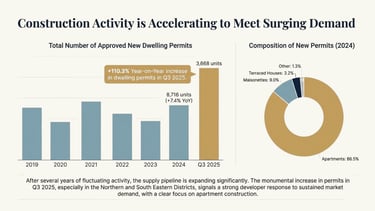
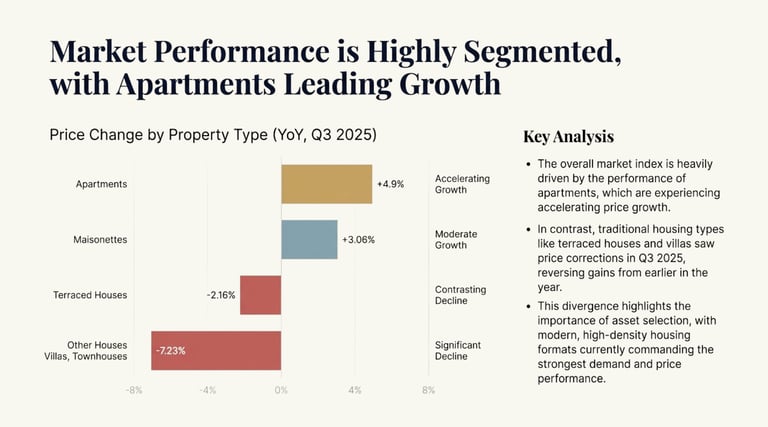
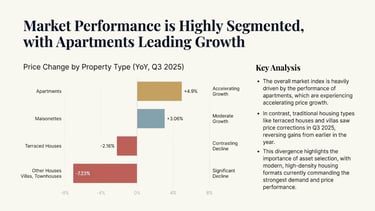
Apartments (+4.9% growth): These remain the "bread and butter" of the Maltese investment portfolio. They are the preferred choice for the transient, high-earning foreign workforce.
Character Homes & Villas: While prestigious, these segments are seeing price "corrections" as buyers shift focus toward lower-maintenance, high-yield modern units.
6. Addressing the 18% Vacancy Myth
The critics often point to Malta’s 18% national vacancy rate. An "Audit" of this data, however, shows that the majority of these properties are either dilapidated traditional homes under legal dispute or secondary holiday homes. For the modern investor, the "effective" vacancy in high-demand zones is near zero. The risk isn't oversupply; it is the scarcity of quality supply.
Conclusion: Engineering Your Exit
Malta’s real estate market in 2025 is a "sovereign asset." It is a market that has survived global pandemics, regulatory shifts, and inflationary pressures. By aligning your portfolio with the demographic shifts of the 130,000-strong expat workforce and the 3.5M annual tourists, you are not just speculating on prices, you are engineering a cash-flow machine.


Address
21 De Tigne Triq Ix-Xatt SLM 3010 Sliema - Malta
Contacts
+356 99270417
info@maltainsider.com
Concierge
Company Formation
Business Enterprise Grants
Mobility Strategy
Real Estate HNWI
Money
Fierce & Tame Limited (C 115080) is a company registered and incorporated in Malta under the Companies Act, Chapter 386 of the Laws of Malta.
All brands and digital assets listed herein are operated by or in association with Fierce & Tame Limited. This website does not constitute legal, financial, or investment advice.
© 2026. All Rights Reserved.