
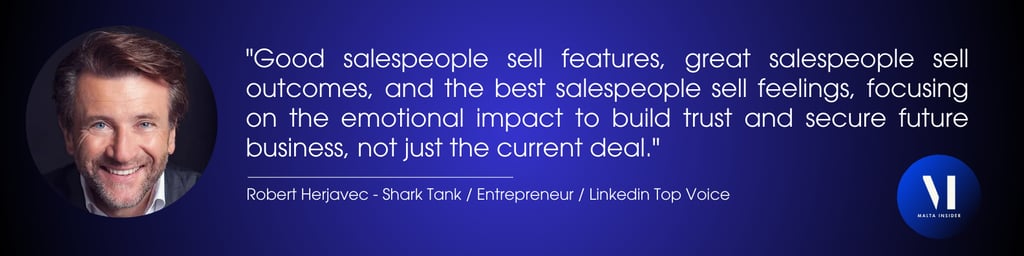
The Great Sales People Sell Feelings.
AI made every post “beautiful.” But beautiful doesn’t sell. Raw, emotional, truth driven language does. LinkedIn is no longer a content platform, it’s an arena where words determine status, authority, and pricing power. If you’re using the wrong language, you’re attracting the wrong clients.
Ilhan Irem Yuce
12/8/2025
There’s a quiet truth in business that AI hasn’t managed to disrupt:
People don’t buy products, they buy the way they want to feel.
Yet LinkedIn today is drowning in AI-polished sentences, theatrical metaphors, and faux-Shakespearean prose. Everyone suddenly sounds like Gabriel García Márquez trapped inside a corporate press release. And the result?
No emotional signal. No identity. No premium clients.
Because the real psychology of selling - the kind Don Draper and Harvey Specter understood intuitively - has nothing to do with flawless grammar or intellectual gymnastics.
It’s about recognition, emotional resonance, and linguistic precision.
Here’s the uncomfortable truth most consultants and founders never confront:
Your language decides who believes you.
And who pays you.
1. Your first message is not a pitch — it’s a doorway
A cold message succeeds only when it accomplishes three things in one breath:
Who you are.
Why you’re connected.
What the point is.
Not a sales script. Not a PDF. Not a value proposition. Humans open doors for people, not for proposals. A message that starts conversations beats a message that starts selling every time. AI can automate outreach, but it cannot automate chemistry. Tools like Success.ai or Instantly.ai can find the right people. Canva can polish the slides. But the part that converts? That lives in your language.
2. If your content sounds universal, it is useless
The fastest way to attract low-paying clients is to write for “everyone.”
Premium clients read one line and ask:
“Is this person talking to me, or talking to the void?”
That’s why your posts need to mirror:
Their internal monologue
Their stage of business
Their emotional reality
Not “Struggling to scale?” Everyone struggles to scale. Try this instead:
“You grew by saying yes to everything.
Now the only way forward is learning what to say no to.”
That line filters instantly. Beginners won’t get it. Eight-figure founders already solved it.
But the $3M–$10M founder feels it in their ribcage.

The Maltainsider Takeaway
LinkedIn is no longer an information platform, it’s a signal platform. Your language signals:
What level you operate at
What emotional reality you understand
What sophistication you expect from the people you work with
If your words are generic, your audience will be too. If your words are sharp, emotional, and precise, you attract the people who make decisions, not the people who browse.
Stop writing like everyone else.
Start writing like someone who understands that feelings sell and clarity closes.
Your next client is not looking for another “expert.”
They’re looking for someone who speaks their world better than they can articulate it themselves.
That’s the real skill. And no AI will ever replace it.
Xoxo
3. Specific language magnetizes high-value clients
General pain points attract general conversations. Precise pain points attract decisive buyers.
Saying “Your team lacks alignment” is weak. Saying “Your team isn’t executing because they don’t trust the last three strategic pivots” hits the nerve no template can touch. Language is not decoration; it is qualification.
4. Emotional resonance beats intellectual sophistication
AI content tries to sound smart.
Premium content tries to make people feel seen.
In sales, nostalgia, tension, relief, pride — these close deals, not bullet points. Harvey Specter never sold “features.”
He sold identity. Don Draper didn’t sell a product; he sold a feeling people wished belonged to them.
LinkedIn is no different.
People buy the emotional version of themselves they can imagine through you.
5. Share the “what” and “why” — never the entire “how”
Your posts should signal depth, not deliver the whole playbook.
The goal is to create curiosity gaps that only your ideal clients care enough to close.
For example:
“Most founders don’t have a sales problem. They have a narrative problem their team can’t sell because it hasn’t been rewritten for the stage they’re actually in.”
No templates. No steps. Just clarity, perspective, and tension which the ingredients that pull premium clients closer.







Address
Sliema - Malta
Contacts
+356 99270417
info@maltainsider.com