
Exhibit A: The Transatlantic Justice Divide - Why U.S. Law Moves Like a Bullet And Europe Moves Like a Glacier
In America, law is a weapon. In Europe, law is a ritual. One prioritises speed, leverage and settlements; the other reverence, procedure and patience. For anyone navigating Malta’s legal system where cases stretch for years and the contrast is more than academic. It’s a lived experience.
Ilhan Irem Yuce
12/4/2025
There’s a reason American legal dramas like Suits feel almost supernatural to Europeans. In the U.S., cases explode into action within days. Attorneys fire subpoenas like warning shots. Depositions are scheduled before the dust even settles. And most disputes end before anyone steps inside a courtroom.
Meanwhile, in Europe - and especially Malta - justice moves differently. Not wrongly. Painfully slowly.
And if you’ve ever spent time in Malta’s courts, you know this isn’t an exaggeration but a logistical reality.
I’ve lived through 15 cases, attended 100+ sittings, and learned one thing:
In the U.S., a case is an event.
In Malta, a case is a season. Sometimes several seasons.
1. The U.S. Model: Speed, Leverage, and Controlled Chaos
American justice is built around one idea: “Resolve the conflict before it becomes expensive.”
That’s why the system relies so heavily on tools like:
Depositions (live questioning under oath before trial)
Subpoenas that compel immediate cooperation
Discovery obligations that move at a rapid, almost aggressive pace
Pre-trial motions that often kill cases before they ever begin
If Europe runs on paperwork, the U.S. runs on pressure.
Attorneys weaponise speed.
They create leverage.
They force decisions.
Most cases never make it to trial, because by the time a judge is involved, the parties already know who’s going to win. It’s not romantic. It’s not noble.
But it works for a population of 330 million people who can’t wait five years for a verdict.
2. The European Framework: Procedure Over Momentum
Europe believes justice must be measured, documented, layered and reviewed.
It’s a philosophy built on:
Procedural fairness
Judicial oversight
Strong protections against coercion
Written submissions over live confrontation
Europe does not share America’s urgency. The assumption is that truth emerges through structure, not speed. But structure has a cost: time. Where the U.S. burns through a dispute in months, Europe can take years; because the system prioritises process above impact.

5. What Malta Can Learn From the U.S.—Without Becoming It
Malta doesn’t need American theatrics. Nobody wants depositions in every coffee shop or lawyers yelling “Objection!” every minute. But three U.S. concepts could genuinely help:
Pre-trial discovery with strict deadlines: It reduces endless courtroom scheduling.
Wider use of written testimony and remote hearings: Cuts down backlog instantly.
Early settlement mechanisms: Most disputes don’t need to last three years.
Malta can remain European in spirit while becoming modern in function.
6. What Individuals Must Learn: Strategy Beats Emotion
If you’re facing legal conflict in Malta, understand one thing: This is not a sprint. It’s strategic long-distance management. In Malta, the strongest advantage isn’t aggression; it’s organization:
Document everything
Respond quickly even if the system doesn’t
Prepare for long cycles
Play the long game emotionally and financially
The U.S. rewards speed. Malta rewards endurance.
Conclusion: Justice Isn’t Just a System—It’s a Culture
The American legal system evolved for scale and speed. Europe evolved for stability and procedure. Malta is a micro-cosm forced to carry both philosophies while battling resource limitations. Neither system is perfect. But understanding the contrast helps people navigate reality instead of fantasy.
Suits is entertainment.
Malta is experience.
And experience teaches the one truth every litigant eventually learns:
The law is not fast or slow.
It simply reflects the world that built it.
3. Malta: A Small Country With a Heavy Caseload
Nowhere is this contrast more visible than Malta. The island has:
A population boom
Rising crime rates
Increasing civil litigation
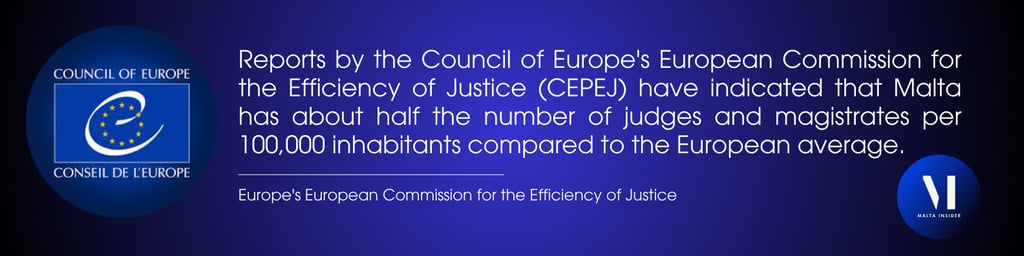
A shortage of judges, magistrates, stenographers and courtrooms
The result? A single case often requires 10+ sittings, spread over months or years, for the simplest procedural steps.
You may wait:
3 months for a hearing
6 months for a decree
A year for evidence
2–5 years for a conclusion
Not because anyone is incompetent, but because the system is overloaded and under-resourced.
Where a U.S. lawyer says: “Let’s schedule a deposition next week.”
A Maltese lawyer says: “The earliest sitting is in March… of next year.”
4. The Psychological Impact: The Case Doesn’t Just Follow You. It Becomes You
When justice takes years, it bleeds into life.
Court becomes:
A recurring appointment
A constant emotional weight
A slow burn of uncertainty
A drain on finances, energy and relationships
This is something Americans rarely experience. Because their system is engineered to end disputes quickly even if imperfectly. Malta’s system, by contrast, demands endurance.
Litigation becomes a second job.
A shadow you carry.
A story that never stops unfolding.
This is why people here often say: “You don’t fight the case. You survive it.”







Address
Sliema - Malta
Contacts
+356 99270417
info@maltainsider.com